Built Dorothy DeLong’s digital presence from the ground up, turning raw documentary archives into a high-converting commercial lead generator.
THE TL;DR
Challenge
Designing a first-time online presence that converts casual viewers into commercial licensing leads without letting heavy interface elements overpower raw documentary imagery.
STRATEGY & KEY FEATURES
I built the ecosystem from the ground up as an active lead-generation tool, avoiding the static pitfalls of traditional portfolios through three strategic solutions:
• Collection Affordances (Section 02):
Visual "Open Collection" signifiers that clarify multi-image series and make deep gallery exploration intuitive.
• Two-Track Inquiry Engine (Section 03):
A dynamic form replacing static mailto links to capture commercial licensing parameters directly at the point of interest.
• Active Discovery & Stories Map (Section 04):
A dedicated Latest Works showcase and geographic Stories Map that prove ongoing project activity and invite early collaboration.
SCOPE & DELIVERABLES
Mobile-First Responsive System & High-Fidelity Prototype —optimized for on-the-go art directors, curators, and commercial buyers reviewing portfolios across mobile and desktop devices.
Outcome
A responsive, high-converting portfolio experience that preserves the raw narrative power of DeLong’s work while establishing a structured pipeline for curators, publishers, and commercial art buyers.
QUICK FACTS
Role
UX/UI Designer
Timeline
4 weeks
Platform
Responsive Website
Audience
Photography viewers, researchers & art audiences
01
The Starting Point
Dorothy DeLong is a documentary photographer capturing candid moments from feminist movements and street encounters. With zero existing online footprint, she lacked a digital channel to showcase her field work or handle commercial inquiries.
Ecosystem Analysis & Findings
To transform the site into an active business tool, I audited peer photographer portfolios alongside target collaborator platforms (e.g., MoMA, Apollo Magazine).
1.
Contextual Storytelling & Sticky Navigation: Peer portfolios acted as static visual archives; target collaborators required active stories, persistent navigation, and background narratives to justify coverage and curation.
2.
Demand for Visual Currency: Collaborators needed immediate access to current projects, driving the need for a dedicated Latest Works showcase.
3.
Commercial Lead Friction: Peer sites relied solely on generic email links or social media DMs, creating friction for high-intent requests and necessitating a dedicated, two-track inquiry engine.

Ecosystem Inspiration: Analyzing how institutional platforms (like MoMA) use sticky navigation and persistent layouts to anchor visual media alongside narrative context, guiding visitors smoothly through dense collections.

Analyzing peer portfolio gaps: Traditional sites rely on passive email links, creating friction for high-intent licensing and exhibition inquiries.
02
Refining the Viewing Experience
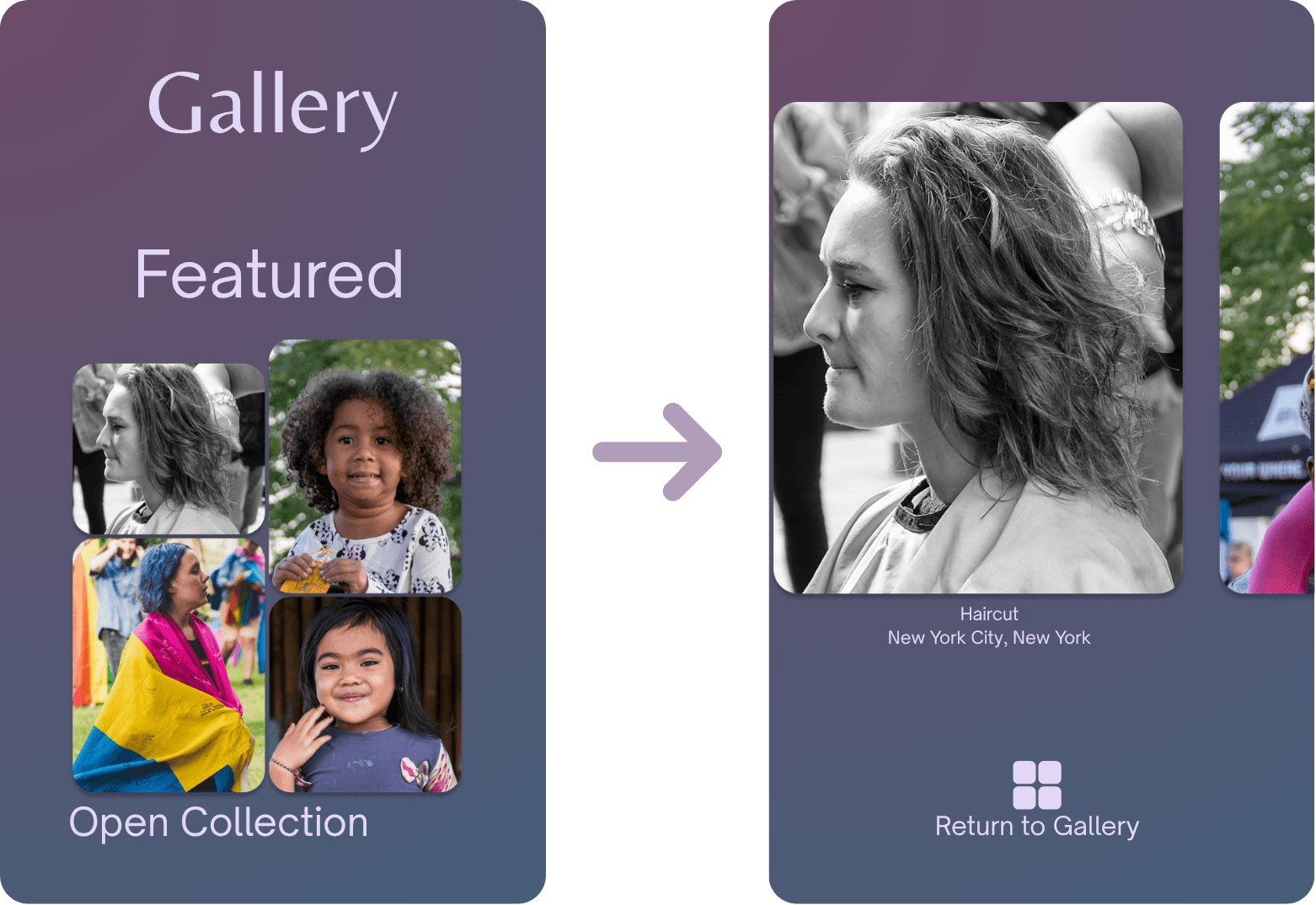
Usability testing revealed that visitors struggled with ambiguous gallery structures. I structured the platform architecture to make multi-image sets immediately obvious and effortless to explore.
Proactive Signifier Discovery: Collection Affordances
• The Insight: Users missed sub-collections and individual photo sets because standard image grids lacked clear visual cues indicating clickable, multi-image groups.
• The Rationale: I introduced prominent "Open Collection" visual tags and persistent indicators across gallery groups, guiding visitors intuitively into swipe-enabled previews without cluttering the primary layout.

03
Following the User Evidence
Auditing early user interactions revealed a clear disconnect between high engagement with featured collections and low conversion to initial inquiries, proving visitors needed a clear channel to discuss rights and permissions.
Layout Pivot: Static Contact Form → Two-Track Inquiry Engine
• The Insight: Usability data proved that lengthier intake forms created friction for casual messages, while traditional portfolios offered no dedicated channel to capture commercial licensing interest.
• The Strategic Pivot: Constructed a dedicated licensing funnel. Replacing rigid form fields with a welcoming single-area launcher and dynamic toggle lets casual visitors connect quickly while seamlessly capturing qualified commercial leads.


04
Optimizing the Conversion Path
To bridge the gap between passive viewing and active collaboration, I designed an immersive discovery layer that replaces static archive layouts with real-world field currency and geographic storytelling.
Feature Pivot: Traditional Gallery → Active Discovery (Latest Works & Stories Map)
• The Insight: Competitive research showed peer portfolios felt inactive and static compared to institutional platforms. Lacking proof of current work, potential collaborators were forced off-platform to check social media to verify if the artist was still actively creating.
• The Rationale: I introduced a Latest Works showcase paired with an interactive Stories Map. This gives curators and editors an immersive window into her current field work and behind-the-scenes narratives, allowing them to verify active currency and initiate future project collaborations directly on-site.


05
System Scalability & Business Impact
Transforming a static photo collection into an active lead-generation tool built for long-term growth.
• Positioning as a Business Tool: Replaced passive visual browsing with high-intent inquiry channels and live creation markers, establishing a direct pipeline for art collectors, publishers, and commercial curators.
• Scalable Content Architecture: Built a modular editorial framework that seamlessly accommodates new geographic series, stories, and commercial licensing tiers without requiring structural site redesigns.

